The 2026 Winter Olympic Games captured global attention and reshaped conversations around resilience, preparation and elite performance. Now that Milano Cortina has concluded, this overview looks at the performances and historic moments that stood out across the games.
The 2026 Winter Olympic Games were hosted across northern Italy, centred on Milan and Cortina d'Ampezzo. The Games combined established Alpine venues with modern urban infrastructure, creating a distributed model that balanced heritage with innovation. It took place from 6th February to the 22nd, with groundbreaking wins making history for many countries.
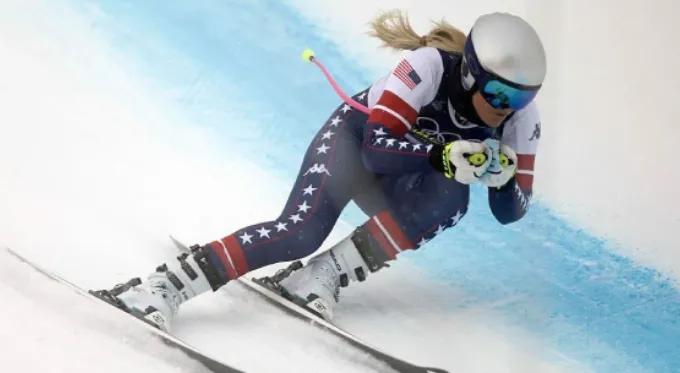 Lindsey Vonn’s Crash and Recovery at the 2026 Winter Olympic Games
American skiing great Lindsey Vonn returned from retirement for her fifth Olympic appearance in Milano Cortina at age 41, even after rupturing her anterior cruciate ligament in a World Cup crash just days before the Games. Despite the injury, she chose to compete in the women’s downhill, a decision widely covered as emblematic of elite commitment and risk management in sport. In the Olympic downhill, she crashed in the early stages of her run after striking a gate mid-air, suffering a complex fracture of her left tibia that ended her season and required immediate medical evacuation by helicopter to a hospital in northern Italy.
Norway’s Johannes Høsflot Klæbo produced the most dominant single-athlete performance of the Games by winning all six men’s cross-country skiing events, a record achievement that helped Norway top the medal table. Reporting noted the scale of the feat and the way he controlled races with decisive surges rather than relying on narrow finishes. For business audiences, this became a clean example of repeatable execution: sustained excellence, not a one-off peak. It also reinforced how endurance sport is built on process discipline over multiple competitive days.
The women’s 50km classic made its Olympic debut at Milano Cortina, and Sweden’s Ebba Andersson won gold with a commanding margin. She still had to manage disruption with a fall during a ski change before she pulled away to finish more than two minutes ahead of Norway’s Heidi Weng, with Switzerland’s Nadja Kälin taking bronze. The event itself became part of the story, as athletes and commentators discussed the physical demands and what the distance signalled for women’s long-distance racing.
Eileen Gu won gold in the women’s freeski halfpipe, defending her Olympic title and becoming the most decorated Olympic freestyle skier with six medals. Recovering after a shaky opening run, she then posted a winning score of 94.75. Her schedule across multiple disciplines was widely covered as an illustration of workload management at the highest level.
Zoe Atkin’s bronze in the women’s freeski halfpipe became a defining British moment because it arrived at the end of a Games that was already historic for Team GB. UK news coverage positioned the medal as part of Great Britain’s best-ever Winter Olympic performance. Zoe's story is often framed around performing after disruption: the final was delayed by weather, and athletes still had to deliver with limited rhythm and high consequence.
Alpine skiing produced a headline far beyond Europe’s traditional winter-sport nations when Lucas Pinheiro Braathen won men’s giant slalom gold while representing Brazil. Lifestyle and sports reporting emphasised the scale: it was described as Brazil’s first Winter Olympic gold and South America’s first Winter Games medal. The significance was two-fold: elite performance on the day, plus a broader impact on national sporting identity and visibility for snowsports in non-traditional markets.
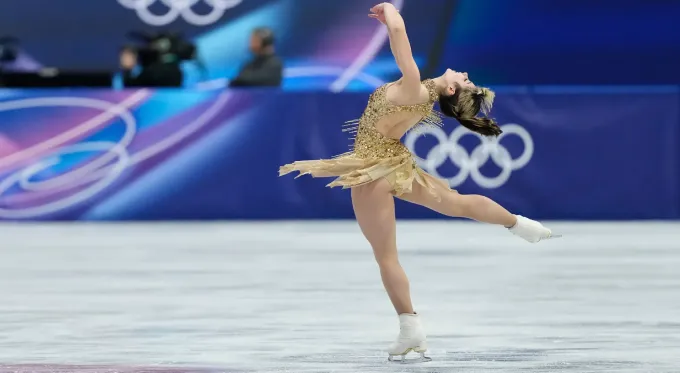 Alysa Liu completed a comeback by winning the women’s singles figure skating gold medal
Alysa Liu won women’s singles gold after returning to the sport following an earlier retirement. The media described a performance built around clean execution, including multiple triple jumps, and positioned it as a comeback story that cut through the noise of the Games. This kind of win is not “inspirational” by default — it becomes useful when it is framed as workload design, burnout prevention, and rebuilding competitive identity with clearer boundaries and support structures.
In sliding sports, Elana Meyers Taylor finally secured Olympic gold by winning the women’s monobob at age 41. The margin was four hundredths of a second over Germany’s Laura Nolte, with Kaillie Humphries taking bronze. The story worked because it was concrete: a veteran athlete delivering under a stopwatch where experience mattered, but complacency was punished. It also reinforced how “late-career” excellence is built on adaptation rather than simply repeating past methods.
Team GB’s men’s curling team took silver after losing the final to Canada. The scoreline was 6–9, and Team GB coverage framed it as a repeat of Beijing 2022’s silver, again after a close contest. Olympic Curling was a hot topic these games, with cheating accusations flying between teams. Despite this, the skills involved are evident: strategy, communication, emotional regulation, and accountability for small errors.
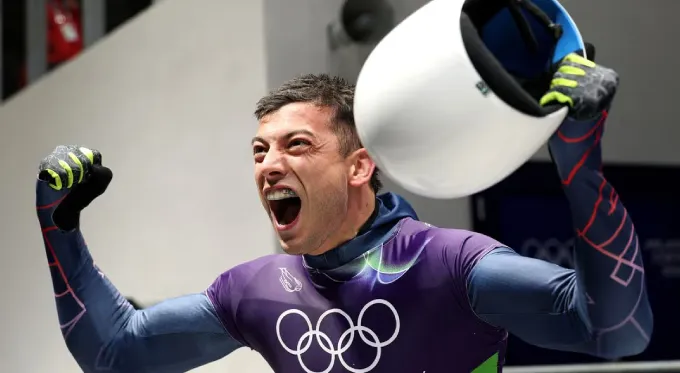 Matt Weston won Team GB’s men’s skeleton gold, then added mixed team gold with Tabitha Stoecker
Matt Weston became one of the faces of Team GB’s Games by winning men’s skeleton gold, then returning to win the inaugural Olympic mixed team skeleton title alongside Tabitha Stoecker. A historic first in the mixed event, the double-gold achievement helped define Great Britain’s most successful Winter Olympics to date. Matt's story is at the confluence of measurable margins and obvious risk, yet performance still depends on routines and controllables.
Charlotte Bankes and Huw Nightingale won mixed team snowboard cross gold, a result described in UK reporting as Great Britain’s first Winter Olympic gold “on snow” and a major contributor to the team’s record medal count. The event itself is chaotic by design, which made the outcome feel earned rather than gifted: athletes had to manage tactical decisions, track position, and split-second judgment in an environment where contact and mistakes are common.
At the conclusion of the 2026 Winter Olympic Games, Great Britain finished with a total of five medals: three golds, one silver and one bronze.
That tally matched the nation’s previous best count from the 2014 Sochi and 2018 PyeongChang Winter Olympics, but what set Milano Cortina apart was the number of gold medals won. For the first time in Winter Olympic history, Great Britain claimed more than one gold at a single Games.
The gold medals came from both established and newer winter-sport disciplines, showcasing the breadth of Team GB’s competitive strength. Matt Weston’s success in the men’s skeleton included two golds — first in his individual event and then alongside Tabitha Stoecker in the inaugural mixed team skeleton — while Charlotte Bankes and Huw Nightingale triumphed in the mixed team snowboard cross. Silver was secured by the men’s curling team after a hard-fought final, and bronze came from Zoe Atkin in the women’s halfpipe.
Overall, Team GB’s performance in 2026 was widely described as historic: it demonstrated not only medal success but also competitive depth across sliding sports and snow disciplines, marking progress in areas traditionally less associated with British winter sport excellence.
Gold: 3
Silver: 1
Bronze: 1
If you are interested in hiring a Winter Olympian who will inspire performance and motivate teams, contact the Olympic Speakers Agency on 0207 1010 553 or fill out our online booking form.
To discuss the details of your event or book one of our exciting Olympic and Paralympic speakers, call a booking agent at Champions Olympic Speakers on 0207 1010 553 or complete our online contact form.

Position at the company
Lorem ipsum dolor sit amet, consectetur adipiscing elit, sed do eiusmod tempor incididunt ut labore et dolore magna aliqua. Eleifend donec pretium vulputate sapien nec sagittis aliquam. Fringilla ut morbi tincidunt augue. Nibh sit amet commodo nulla facilisi.

 Request information
 0207 1010 553